
Purchasing a luxury home is a fundamentally different process than buying a standard property. The price tag is higher, obviously, but the real difference lies in the details, and the details are easy to miss if you don’t know what to look for in a luxury home. A home can check every surface-level box – grand entry, ocean views, a chef’s kitchen – and still be a poor purchase because of what’s underneath, around it, or missing from it entirely.
In 2026, luxury homes are now defined by design quality, privacy, comfort, and long-term value, not just square footage or a prestigious address. People browsing luxury homes for sale are asking new questions. They want to know how a home supports their lifestyle, protects their privacy, improves wellness, and adapts to future needs. In other words, “luxury” is no longer just about status; it is about liveability, quality, and long-term value.
At Jolinda Realty & Luxury Homes, we understand that finding the perfect luxury property requires a discerning eye. This comprehensive guide will walk you through what truly separates a well-built, well-positioned luxury house from one that’s been priced to look the part. The luxury home features that matter most aren’t always the ones that show up in the listing photos. If you’re exploring the luxury real estate market, these are the things worth your attention before you make an offer.
Location, Privacy, and Surroundings: what to look for in a luxury home
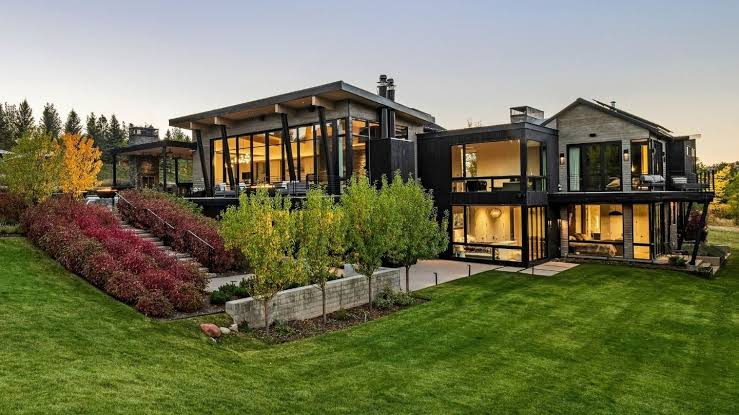
Location isn’t just about the zip code; it’s about what the property delivers beyond its walls and what it protects you from. A prime location provides exclusivity and privacy while offering easy access to elite schools, work hubs, renowned dining, upscale shopping, and cultural landmarks.
Start with the immediate surroundings. A home in a gated community offers a level of access control that an unincorporated lot simply can’t replicate. Understanding what the neighbourhood infrastructure provides matters because it affects both your day-to-day comfort and the property’s long-term value.
Privacy deserves its own consideration. How a neighbourhood handles private security, whether that’s staffed gates, roving patrols, or camera infrastructure, is a meaningful differentiator among high-end properties. For buyers considering beachfront or waterfront homes, public access easements are worth scrutinising; some coastal properties carry legal obligations for public beach access that significantly affect how private the land actually feels.
Zoning matters more than most luxury buyers initially realise. Air rights, adjacency to commercial development, and local regulations can all change what gets built near you after you’ve moved in. That view you’re paying a premium for is only guaranteed if the zoning protects it.
Build Quality: what to look for in a luxury home
Aesthetics are easy to stage. Construction quality is much harder to fake, which is exactly why most buyers don’t look closely enough at it. An open floor plan photographs well and feels expansive on a tour, but the living room and main social spaces need to be evaluated for how they actually function. Think about traffic flow, acoustic separation from private areas, and whether the layout serves daily life or just impresses guests.
Materials and Finishes: what to look for in a luxury home
Premium materials show up in the details that don’t photograph well. Run your hand along the millwork. Open and close the doors. Look at how the stone meets the wall, how the cabinetry is joined, and whether the lighting fixture placements feel considered or like an afterthought. Custom millwork and custom cabinetry done properly have a weight and precision to them that prefabricated alternatives can’t replicate.
Marble, hardwood, and hand-applied finishes are common in luxury homes, but the quality within those categories varies enormously. Quality materials are specific and documentable, so ask about the craftsmen and the suppliers and request paperwork where possible. A marble floor installed by a skilled craftsman with tight grout lines and properly sealed edges is a completely different product than marble installed fast and cheap.
Watch for what gets called luxury but isn’t: brushed brass fixtures on builder-grade cabinets, stone-look porcelain passed off as actual stone, or hollow-core doors and synthetic trim throughout. True luxury doesn’t hide behind good lighting. A proper home inspection by someone who specialises in high-end properties will surface most of this.
The Heart of the Home: Kitchens That Deliver
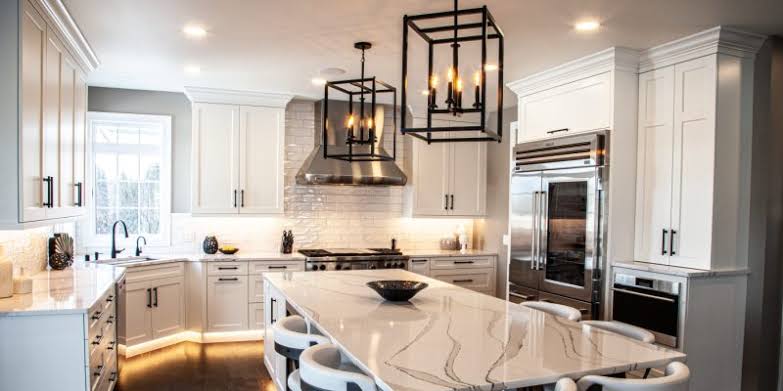
A gourmet kitchen in a real luxury home has commercial-grade bones. That means a six-burner range or more, a Sub-Zero or equivalent refrigeration unit, a dedicated wine fridge, and enough counter space to actually cook rather than just display appliances. High-end buyers expect chef’s kitchens with premium appliances from brands like Gaggenau, Miele, or Wolf.
The layout matters as much as the equipment. A kitchen where the prep area, cooking zone, and plating space are logically arranged will function better than one designed around visual impact alone. Custom cabinetry should go floor to ceiling and use full-extension, soft-close hardware throughout.
A butler’s pantry or prep kitchen nearby keeps the main space clean when you’re entertaining and is a hallmark of a truly luxury home.
Primary Suite and Bathroom: what to look for in a luxury home
The primary suite is where luxury homeowners spend the most private time in the home, which means it’s worth evaluating seriously rather than just admiring.
Size matters, but layout matters more. A well-designed primary suite separates sleeping, sitting, and dressing into distinct zones without feeling chopped up. A proper dressing room—with its own lighting, a centre island, and full-length mirrors is standard in homes at the top of the market.
The spa-like bathroom should feel like a retreat rather than a showroom. Heated floors, a soaking tub with a view, a large shower with multiple heads and a rain fixture, and enough natural light to make the space feel alive rather than clinical. Wellness considerations are increasingly part of how luxury bathrooms are designed, covering steam showers, circadian lighting, and air filtration. These are expectations in modern luxury homes, not novelties.
Smart Home Technology: what to look for in a luxury home
A luxury home that isn’t wired intelligently is already behind. The real question is how well the technology has been integrated, not just whether it exists.
The best systems run on a single platform where lighting, climate, security, audio, and window treatments are all controlled through one interface. Smart thermostats that learn your schedule aren’t a selling point anymore; they’re a baseline. What separates a well-integrated smart home from a patchwork of disconnected devices is whether the systems actually talk to each other and whether the infrastructure was built in during construction or bolted on afterwards. Retrofitted smart systems are almost always less reliable and harder to maintain.
Ask for documentation on the system, the integrator who installed it, and any ongoing service agreements. Smart home infrastructure is only as good as the support behind it. Advanced security systems, gated entry, and surveillance provide privacy and peace of mind, while high-speed connectivity throughout the home is now essential, especially for households that work remotely.
Outdoor Living: what to look for in a luxury home
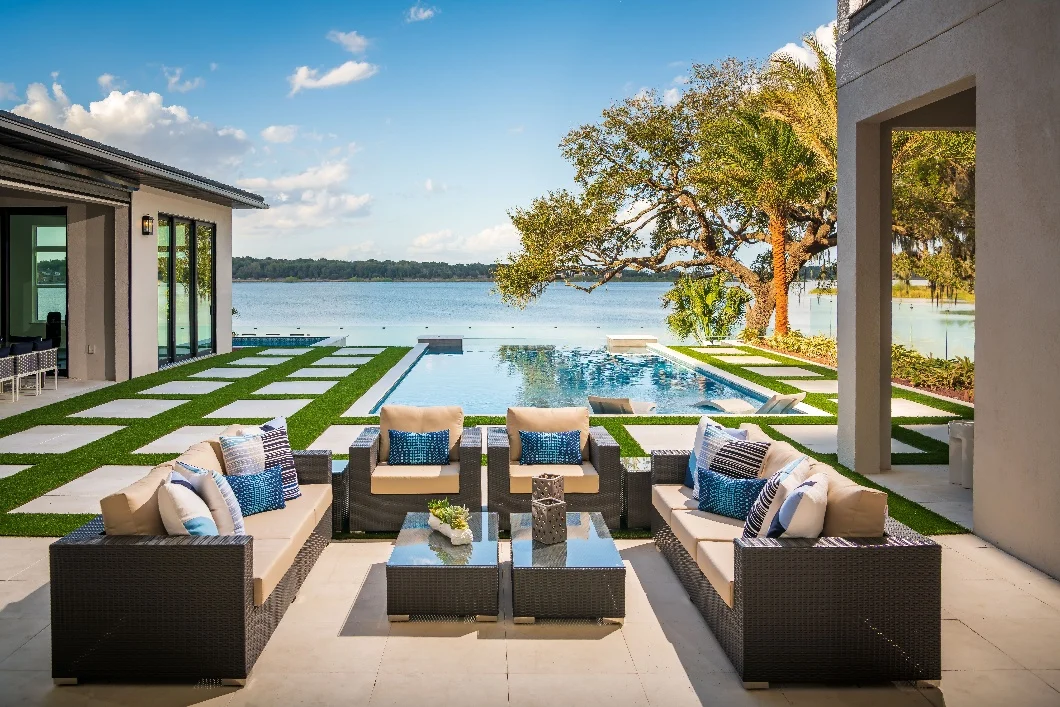
The outdoor space in a luxury home should function as an additional living area, not just scenery. A well-designed outdoor living space has distinct zones for dining, lounging, and cooking that each work independently but come together when you need them to.
An outdoor kitchen with a built-in grill, prep surface, refrigeration, and a covered dining area is what to look for in a luxury home that extends the usable square footage of the home significantly. Fire features, infinity pools, and landscaping that creates visual privacy without feeling like a fortress are all worth evaluating carefully. So is the orientation of the property; a backyard that gets afternoon shade in summer is considerably more liveable than one that bakes.
For properties on or near the water, look at what the outdoor space connects to. A luxury property with direct beach or waterfront access is a categorically different asset than one with a view of the water from a distance.
Wellness Amenities: what to look for in a luxury home
Buyers expect wellness features in luxury homes. Spa-style bathrooms, good natural light, and quieter sleeping areas are high on the list. Dedicated fitness space is a plus, and so are filtration systems that support clean air and better water quality.
What was once a luxury amenity has become the foundation of high-end living. Buyers now ask about purified air systems, mineralised water, circadian lighting, and toxin-free materials. Many are investing in recovery spaces that elevate daily living, including infrared saunas, cold plunges, massage rooms, and quiet areas for reflection. Modern luxury is about how a home helps you live better.
Special-Use Rooms: what to look for in a luxury home
Special-use rooms are where a luxury home stops being a large house and starts being something built for a specific way of living. A dedicated home theatre, properly soundproofed with tiered seating and a real projection system, is a different experience from a bonus room with a big TV. A home gym with rubber flooring, proper ventilation, and enough square footage for actual equipment serves a real function.
Some of the most compelling luxury homes include things luxury homebuyers don’t always think to ask about: a wine cellar with climate control, a recording studio, an art room, or hidden rooms designed to serve as secure storage or private retreats. These features often reflect how deeply the original design was customised to a specific way of living.
Evaluate each special-use room the same way you’d evaluate the kitchen. Ask whether it actually functions or just looks good in photos. A home gym with no ventilation is uncomfortable to use in summer. A home theatre without proper acoustic treatment is just a dark room. The amenities should work.
Sustainability and Efficiency: Long-Term Value
Energy-efficient construction, insulated windows, and modern HVAC systems are the standard in newly built luxury homes. Many luxury home builders now prioritise solar readiness, sustainable building materials, water-efficient fixtures, and high-performance insulation. Buyers understand that long-term operating costs and environmental impact matter as much as aesthetics. Sustainability is no longer optional in high-end construction; it is expected.
Look for double or triple-glazed windows, solar power integration and battery storage, efficient insulation and cooling systems, and rainwater harvesting or greywater recycling.
Work With an Agent Who Knows the Luxury Market
The luxury real estate market operates differently from the broader market in ways that matter to buyers. Many luxury listings never appear on the MLS. Sellers prioritise their privacy and rely on their agents to bring vetted, serious buyers directly. If your agent doesn’t have established relationships in this market, you’re likely not seeing the full picture of what’s available.
A specialist in luxury real estate also understands how to evaluate properties that don’t have clean comparables, how to structure offers on homes where the seller isn’t particularly motivated, how to manage due diligence on complex assets, and how to evaluate property management considerations, HOA structures, and title complexities.
Final Thoughts: Finding Your Dream Luxury Home
Whether you’re buying an existing property or building with luxury home builders, workmanship is part of value. It affects maintenance, resale, and how the home holds up over the years. A luxury home should feel tailored to you, reflecting your values, supporting your lifestyle, and providing enduring enjoyment.
The strongest luxury homes tend to share a few key drivers: location quality and neighbourhood, land features and lot size, build quality and layout, long-term usability, and the intangibles that create a setting that is hard to duplicate.
If you’re ready to explore luxury homes for sale or want expert guidance on what to look for in a luxury home, contact Jolinda Realty & Luxury Homes today. We’ll help you navigate the market with confidence, identify opportunities that align with both your personal desires and financial goals, and ensure you make an informed decision that stands the test of time.
Thinking of buying or selling a luxury property? Contact Jolinda Realty & Luxury Homes to start your journey with a team that understands the details that truly matter.

Join The Discussion